Dragon alternative for ai developers
A Dragon alternative for ai developers who need usable output, not more cleanup
If Dragon still leaves too much recap work, admin drag, or lost context, this is the pain-first alternative.
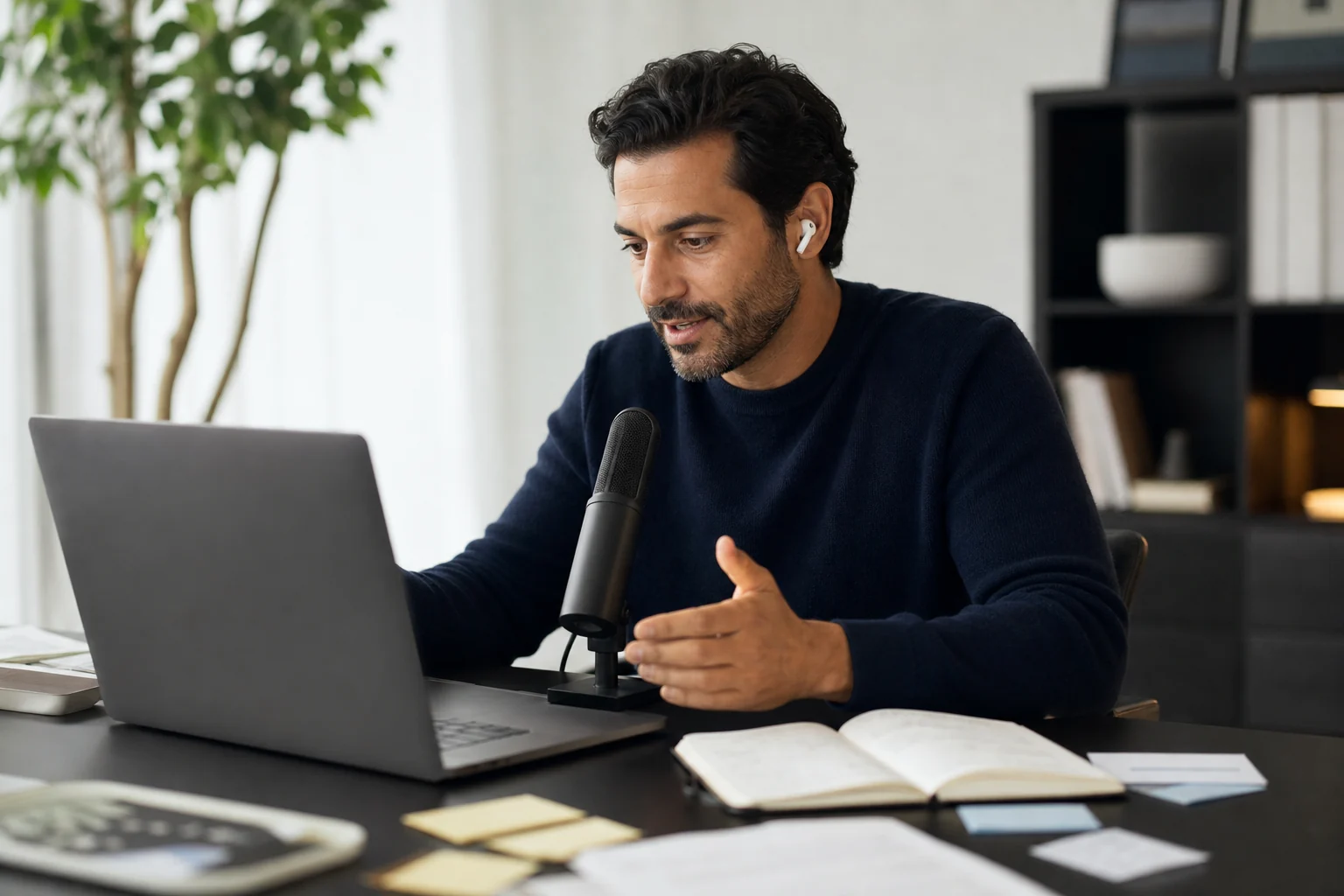
Superscribe
Stop rebuilding work after the fact
Use Superscribe to capture the words, context, next steps, and time while the work is still happening.
As an AI developer, you work at the speed of thought. Your primary output isn’t just code- it’s the sequence of prompts, implementation notes, and flashes of context spoken aloud as you navigate Claude, Cursor, and GitHub. The problem with traditional dictation tools like Dragon is that they just give you more raw material to process. You get a transcript, another inbox to manage, another cleanup task. It doesn’t capture the billable narrative of the work itself.
If you’re looking for a Dragon alternative for AI developers, it shouldn’t just be about faster typing. It should be about turning your live, spoken work into structured, project-matched context without a second pass.
Try it on the real workflow
Turn the next spoken note into finished work
Use Superscribe while the context is still fresh. Speak naturally, keep working, and let the output land where it belongs.
The Real Cost of ‘Fast’ Isn’t Speed- It’s Lost Context
Chaining prompts, testing agent outputs, and documenting issues happens in a fluid, verbal stream. This spoken context is valuable. It’s the “why” behind the code, the justification for a time entry, and the content of the next client update. When this stream isn’t captured, it has to be painfully reconstructed later from memory, commit logs, and Slack messages.
Dragon captures the words, but it doesn’t understand the work. It gives you a text file, disconnected from the project, the ticket, or the specific coding session it belongs to. The result is a text blob that you still have to manually copy, paste, and categorize. This administrative drag pulls you out of deep work and turns valuable context into a cleanup chore. It doesn’t solve the core problem- making the work itself billable and explainable.
A Better Dragon Alternative for AI Developers Connects Work, Not Just Words
Instead of treating dictation as a way to type faster, we should treat it as a work event to be captured. When you speak a prompt, a project note, or a ticket update, that’s a measurable, classifiable piece of work. A true alternative to Dragon needs to understand this.
This is the core idea behind Superscribe. It’s a voice layer for your existing tools that works in the background.
Here’s how it’s different:
- Live dictation is the tracked event. You press a hotkey and speak. The text appears in whatever app you’re using- Cursor, Linear, Slack, a Google Doc.
- Time is tracked automatically. The moment you dictate, Superscribe logs the time. There’s no separate timer to start or stop. The act of speaking is the time entry.
- Context is matched semantically. As you work, Superscribe learns that when you’re in a certain app or window, you’re working on “Project X.” Spoken notes and time are automatically tagged to the right project without you doing anything.
Dragon gives you text. Superscribe gives you a project-matched, time-stamped log of your spoken work, ready for invoices, reports, or client updates.
See the workflow
Map Spoken Prompts to Billable Time
See how live dictation can become your voice layer for prompts, tickets, and project context without starting and stopping a timer.
I Built This Because I Kept Losing My Own Billable Hours
I’m Siim, and I built Superscribe because I was tired of guessing my hours every month. As a developer, I’d look through GitHub commits, chat messages, and random notes, trying to piece together the narrative of what I actually did. The numbers were never right, and I knew I was losing money on the context, not just the code.
Three years ago, I had an idea for a phone app to automatically capture client calls. It seemed too hard, so I dropped it. I kept building other voice tools, and each one taught me something new. The missing piece became clear when I added automatic time tracking to the main desktop app- I needed to connect all my spoken work, from dictation to calls, without extra effort.
The real proof hit me on a flight. I was using the plane’s Starlink Wi-Fi, dictating implementation notes and project updates. The words were transcribed, cleaned up, assigned to the right project, and logged with the correct time- all automatically. An agent could have taken the next step without any input from me. That used to be the goal of my prompts. Now it is just how the tool works.
That used to be a wish. Now it’s the product. This is the tool I always wanted for myself. You speak. The clean words appear right where you are working. The time, notes, and context happen by themselves in the background. No timers. No guessing. Just good work that gets counted. It’s for builders who want to stay in creation mode instead of doing paperwork later.
Dragon vs. Superscribe for AI Development
A quick comparison shows the difference in philosophy. One is for transcription. The other is for context capture.
| Feature | Dragon | Superscribe |
|---|---|---|
| Live Dictation | Yes | Yes, in any app |
| Automatic Time Tracking | No | Yes, based on dictation |
| Semantic Project Matching | No | Yes, automatic |
| Voice-based Workflows | Manual copy-paste | Agent-ready output |
| Primary Goal | Transcription | Billable Context Capture |
Capture the work as it happens
Stop Rebuilding Work After the Fact
Use your next real prompt or project note to test it. Capture the words, context, and time while the work is still happening.
Frequently Asked Questions
Does this integrate directly with Claude, Cursor, or my IDE? Superscribe works as a layer on top of your existing tools. You dictate into them. There is no complex API setup. It simply works wherever you can type text. The intelligence is in how it sees where you’re working and automatically categorizes the time and text for you in the background. It’s simpler and works everywhere.
Is this just for English? No. Superscribe supports many languages and includes automatic language detection. If you work with an international team or on multilingual projects, you can switch languages seamlessly just by speaking.
What if I just want to dictate without tracking time? You are in control. While automatic time tracking is the key to capturing lost billable context, you can easily manage entries or use the app purely for its high-quality dictation. The goal is to capture the value of your work, not to create administrative noise.