Hubstaff alternative for vibe coders
A Hubstaff alternative for vibe coders who need usable output, not more cleanup
If Hubstaff still leaves too much recap work, admin drag, or lost context, this is the pain-first alternative.
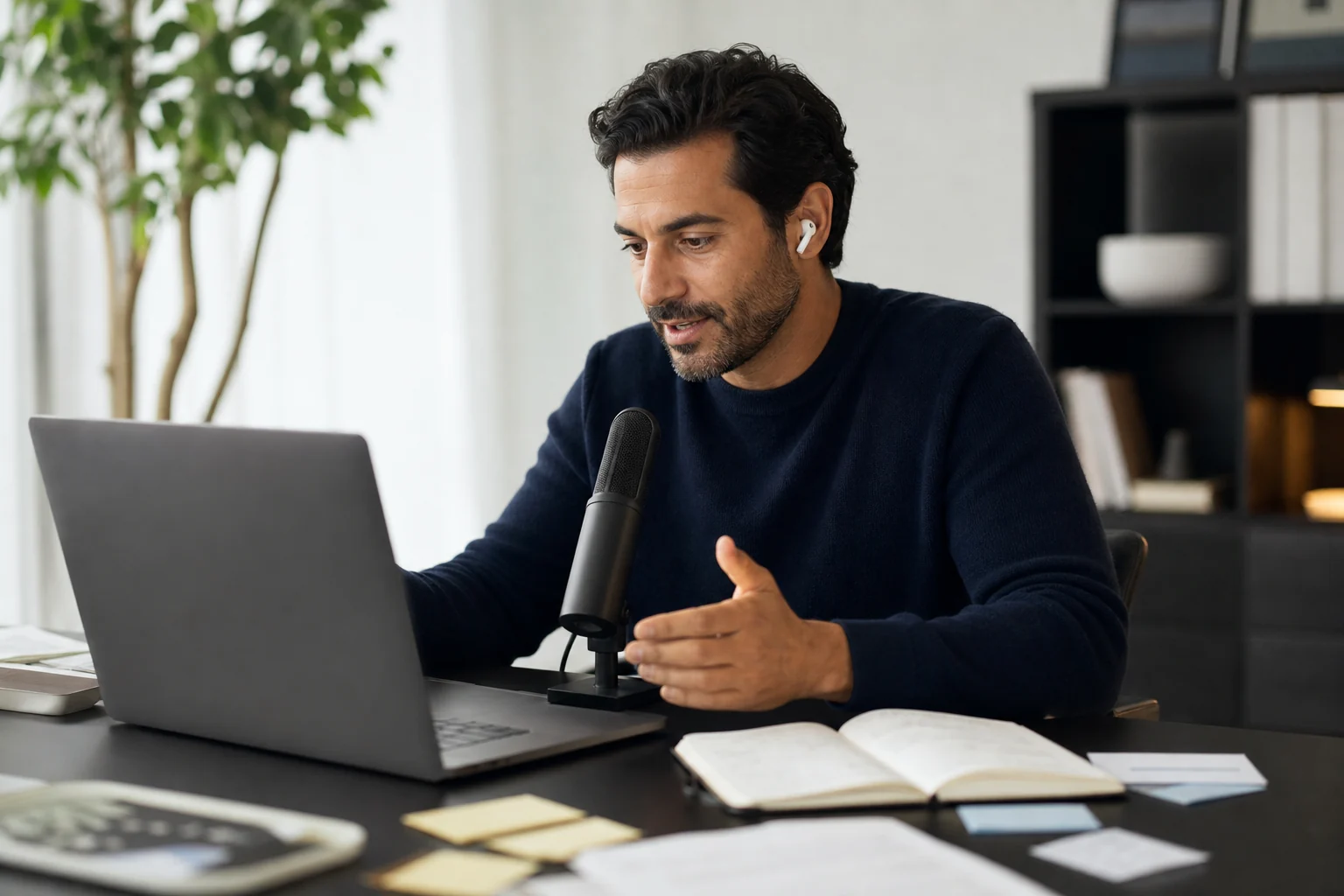
Superscribe
Stop rebuilding work after the fact
Use Superscribe to capture the words, context, next steps, and time while the work is still happening.
Vibe coding is fast. You jump between a prompt, a code editor, a client message, and back to the prompt. The context is in your head and in the words you speak. The last thing you want is a tool that interrupts your flow to ask what you’re doing.
Hubstaff is great for seeing if someone is active at their computer. But for a vibe coder, “activity” is the wrong metric. Screenshots and activity bars don’t capture the brilliant prompt you spoke aloud or the client context you just clarified. You end up with proof of work but no actual record of the work itself. That means you still have to write it all down later.
If you’re looking for a Hubstaff alternative that captures the work instead of just the activity, you’re in the right place. This is about building a voice layer that gets your spoken work into a usable format-with time tracked automatically.
Try it on the real workflow
Turn the next spoken note into finished work
Use Superscribe while the context is still fresh. Speak naturally, keep working, and let the output land where it belongs.
Why activity tracking misses the point
The core idea behind Hubstaff is surveillance-based trust. It monitors activity to make sure work is being done. For vibe coders and AI-native developers, this model is broken. The most valuable work isn’t always typing. It’s the thinking, the prompting, the quick pivots.
Hubstaff tracks:
- Mouse movements and keyboard strokes
- App and URL usage
- Screenshots of your desktop
This creates a log of being busy. It doesn’t create a record of what you accomplished. You still have to stop your flow, open a project management tool, and write down what you did. It’s a second pass of admin work that pulls you out of the creative zone. The context is lost, and the time entry becomes a vague guess.
For vibe coders, the real value is in the spoken layer. The prompts you dictate, the notes you make between experiments, the client updates you speak aloud-that’s the billable work. Hubstaff doesn’t see it, hear it, or record it.
A better Hubstaff alternative for vibe coders
A true alternative shouldn’t just be a different kind of timer. It should be a different way of working. Instead of tracking activity, it should capture output. Here is how Superscribe’s approach is different.
| Feature | Hubstaff | Superscribe |
|---|---|---|
| Core Method | Activity monitoring & screenshots | Live dictation & transcription |
| Context Capture | Visual proof of activity | Verbatim text of spoken work |
| Workflow | Work, then manually log details | Speak to work, log is created automatically |
| Best For | Managing remote team activity | Capturing billable context for creators |
The goal isn’t just to prove you were working. The goal is to have a usable record of the work itself, ready to be sent to a client or logged in a ticket, without the cleanup pass.
See the workflow
Get the Vibe Coder's Workflow Guide
Learn how to use a voice layer to capture prompts, notes, and client context without stopping to type. A practical guide to less admin drag.
I built this because I hate guessing my hours
I built Superscribe because I got tired of guessing my hours at the end of every month. I would look through emails, code, chat messages and random notes trying to remember what I actually did. As a coder who moves fast, the numbers were never right and I knew I was losing money. The context was gone.
The problem wasn’t a lack of work. It was a lack of a record. The manual timers I tried just added another task to the pile. I’d forget to start them or stop them. It felt like corporate cosplay for a workflow that was anything but.
I needed something that would capture the work as it happened. For me, so much of that work happens through voice. I talk through a problem. I dictate a message to a client. I speak a prompt to an AI. That’s where the real context is.
That’s why I built Superscribe as a desktop-first, dictation-first tool. You speak. Clean words appear right in the app you are using-your editor, your browser, your terminal. In the background, the time, notes, and context happen by themselves. No timers. No guessing. Just good work that gets counted. It’s the tool I always wanted.
How live dictation replaces the timesheet
The workflow is simple. Instead of having a timer running in the background, you use Superscribe to dictate your work notes, prompts, or updates as they happen.
- Dictate Anywhere: Use a hotkey to activate dictation in any text field on your Mac. Speak your prompt, your project note, your to-do list, or a client update.
- Capture Automatically: Superscribe transcribes your words directly where your cursor is.
- Track in the Background: The act of dictating is the event. Superscribe captures the text and logs the time. It uses the content of your dictation to semantically match the entry to the right project. The more you use it, the smarter it gets.
- Bill Fairly: You can set a minimum billable unit. If you dictate a two-minute note but bill in 30-minute increments, Superscribe rounds it up. This ensures all the small fragments of work are captured and billed credibly.
This turns admin work into a natural part of the creative process. The record is created as a byproduct of you just doing your work.
Test it on a real task
Dictate your next prompt or ticket
Stop translating spoken ideas into typed admin. Download Superscribe and use your next real work task as the test. See the output, not just the activity.
Frequently Asked Questions
Does this work inside my IDE or other tools? Yes. Superscribe is a system-wide dictation tool for macOS. It works in any application that has a text input field. You can dictate directly into VS Code, Warp, iTerm, Notion, Slack, or your browser.
Do I have to manually start and stop a timer? No. The act of dictation is the trigger. Time is tracked automatically when you speak. You don’t manage a timer; you just do your work, and the timekeeping happens based on the work itself.
Is this only for English? No. Superscribe supports many languages and can automatically detect the language you’re speaking. This is useful for multilingual coders or those who work with international clients.