AI Phone Call Notes
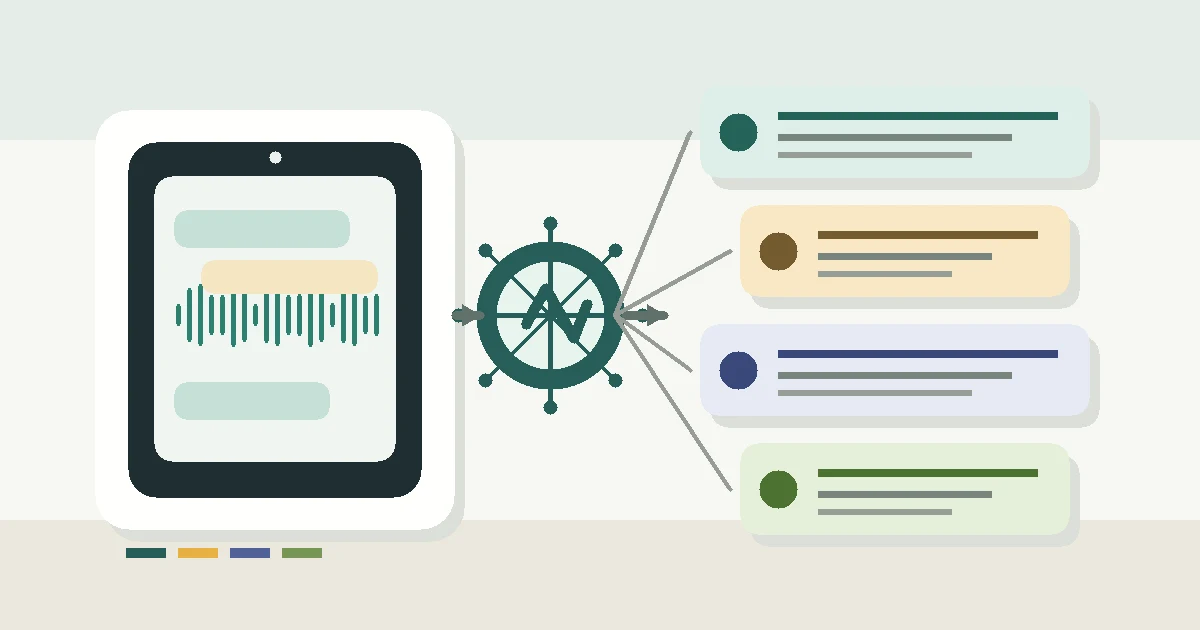
AI phone call notes should not stop at a polite recap.
That is the trap.
The call ends. A summary appears. It says the team discussed onboarding, reviewed next steps, and agreed to follow up.
Readable, yes.
Useful, barely.
The actual work is usually buried inside the call: one decision, one client promise, one internal task, one risk, one follow-up email, one CRM update, maybe one support ticket. If the AI note does not separate those pieces, someone still has to replay the call in their head and rebuild the work by hand.
AI phone call notes are only useful when they preserve what changed and what needs to happen next.
When phone calls should become work output
Turn calls into notes, follow-ups, and next steps
Superscribe Phone helps turn business calls into reviewed summaries, CRM context, tickets, tasks, follow-ups, and billable detail before the next conversation starts.
The short version
Good AI phone call notes should capture the business result of the call, not just the words.
That usually means:
- short summary
- decisions
- action items
- owners
- due dates
- risks
- open questions
- customer context
- the client-safe recap the follow-up needs
- CRM, ticket, or task routing
The test is simple.
Could someone who missed the call understand what changed, what is owed, and where the next update belongs?
If not, the AI note is unfinished.
A transcript is source material, not the output
Transcripts are useful when exact wording matters.
They are weak as daily phone call notes.
A transcript preserves everything: greetings, repeats, side comments, corrections, half-finished thoughts, and the parts nobody needs again. That can help with audit or reference, but it is too heavy for the next workflow.
Most teams do not need to reread a call.
They need the promise, the owner, the deadline, the risk, and the next action.
That is the same reason client call notes software should be judged by the output it creates after the call. The transcript is the raw material. The note is the shaped version. The workflow is what happens after review.
AI can help with all three, but only if the note is structured enough to use.
Where AI phone call notes usually fail
Most AI note failures happen after the summary is generated.
The note exists, but the team still has to:
- clean up vague language
- find the real decision
- pull out the action items
- write the client follow-up
- update the CRM
- create a support ticket
- tell the team what changed
- preserve billing or scope context
That work feels small until it happens after every call.
For a service business, this becomes the post-call tax. Calls create work, but the work does not land anywhere. A summary sits in one system while the CRM, help desk, project board, inbox, and invoice notes wait for a human to translate it.
The problem is not note-taking alone.
The problem is routing.
What AI phone call notes should include
A useful AI phone call note should be specific without becoming long.
Use this structure as a buying checklist.
1. Call purpose
The note should say why the call happened.
Weak:
- Check-in call
- Support call
- Sales call
Useful:
- Diagnose why the client cannot invite two users to the workspace.
- Confirm revised onboarding scope after the import delay.
- Decide whether the sales account is ready for procurement review.
The purpose frames every decision after it.
2. Decisions
Decisions should be written as settled facts.
“Client liked the option” is not a decision.
“Client approved option B if implementation stays under four hours” is a decision.
The note should capture what was approved, rejected, delayed, delegated, or left undecided.
3. Action items
Every action item needs an owner.
If the owner is unclear, the note should say that too. A visible gap is better than a fake assignment.
Useful action items sound like this:
- Send revised onboarding checklist to Priya by Thursday.
- Create support ticket for missing workspace permissions.
- Ask finance whether the new plan needs procurement approval.
- Add the migration risk to the account note.
That is where call notes to tasks becomes more valuable than a prettier recap.
4. Risks and blockers
Phone calls often contain small warnings that disappear from generic summaries.
A good AI note should preserve:
- budget concern
- timeline risk
- missing stakeholder
- technical blocker
- unclear approval
- customer frustration
- scope change
If a client says, “We can launch Friday, but legal has not reviewed the data clause,” the note should not reduce that to “timeline discussed.”
5. Follow-up material
The note should make the follow-up faster to write.
That does not mean the tool writes or sends the email for you.
It means the call note should contain the useful pieces:
- confirmed decisions
- promised materials
- open questions
- next meeting or deadline
- client-safe recap
If the follow-up still requires replaying the whole call, the AI note did not finish the job.
The note should route into the next system
The best AI phone call notes do not live only in the phone tool.
They become the next system update:
- CRM note for account context
- ticket update for support detail
- task for the owner
- recap material for the client follow-up email
- handoff note for the team
- billing note when the call affects paid work
That is why a client call summary generator should be judged by what it helps you do after the summary exists.
One call can create several outputs.
The account manager needs the CRM context. The support lead needs the ticket detail. The project owner needs the task. The client needs the follow-up. Finance may need the scope or billing note.
One paragraph cannot serve all of those jobs equally well.
Review still matters
AI phone call notes should be reviewed before they become record.
You do not want a hallucinated promise in the CRM. You do not want a vague support issue becoming a ticket. You do not want a billing note that invents work that did not happen.
The better workflow is:
- Capture the call.
- Structure the note.
- Review while the call is still fresh.
- Route each piece to the right place.
That keeps speed without turning the system of record into a junk drawer.
Where Superscribe fits
Superscribe Phone is built for the layer after the call.
It helps phone conversations become reviewed summaries, follow-ups, CRM context, tickets, tasks, and billable detail instead of another cleanup queue.
That matters because the call is rarely the end of the work.
The call creates the work.
If the AI note only summarizes what happened, the team still has to translate the conversation into business output. If the AI note separates decisions, actions, risks, and destinations, the next workflow is already halfway done.
Buying checklist
Before choosing an AI phone call notes tool, ask:
- Does it capture the call reliably?
- Does it separate decisions from general summary?
- Does it identify action items, owners, and dates?
- Does it preserve risks and open questions?
- Does it capture what the follow-up email needs?
- Does it create CRM, ticket, task, or handoff-ready output?
- Can a human review the note before it becomes record?
- Does it reduce cleanup, or just create a nicer note to clean up?
The last question is the real one.
AI phone call notes are not valuable because they sound polished.
They are valuable when they make the next step obvious.