ai developers screening calls
AI Developers Screening Calls, without the cleanup pile later
If screening calls keep creating recap debt, Superscribe helps reduce that lag while the context is still live.
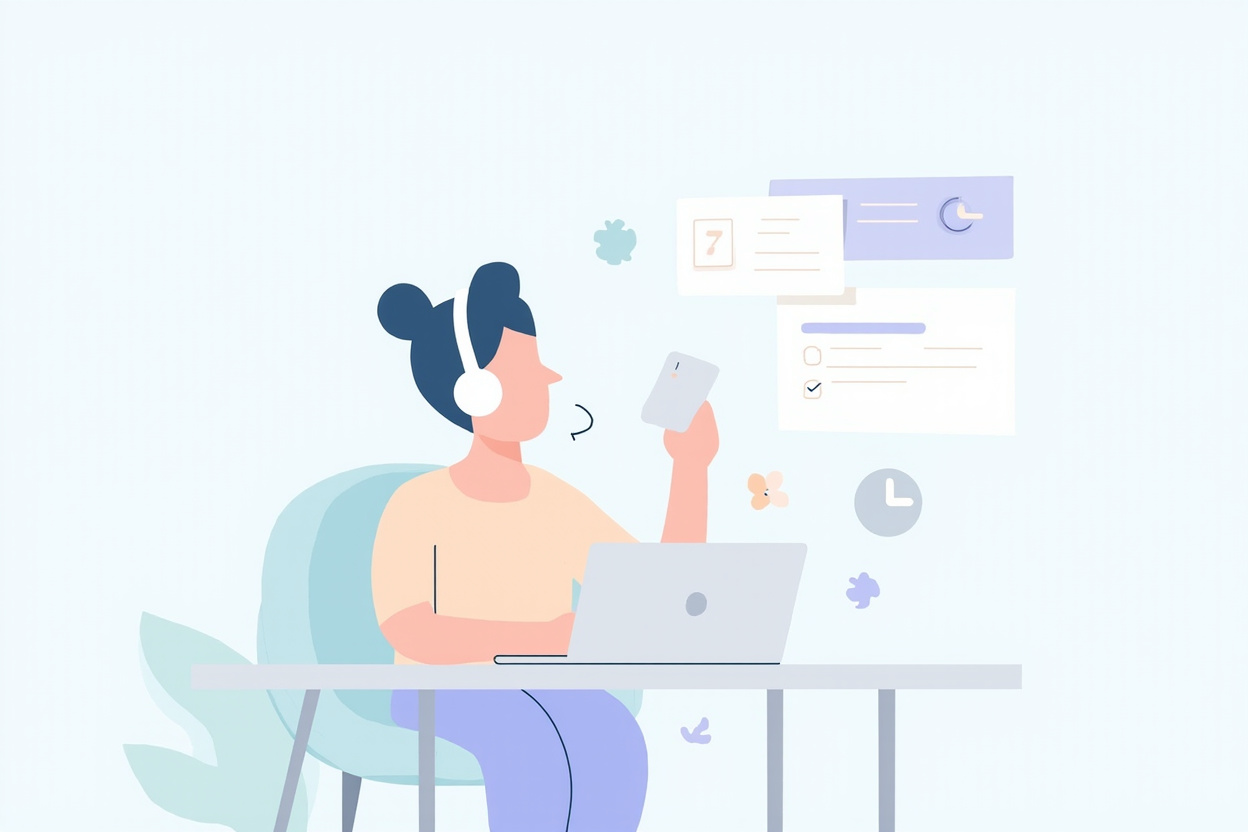
Use your real phone number to test the call workflow. No new apps for your clients.
Screening calls are a classic paradox. You need to be fully present to evaluate a candidate or client, but you also need a perfect record to make a good decision later. Splitting your focus between listening and typing notes means you do both poorly. You miss a subtle cue while jotting down a detail. You forget a key question because you were trying to capture an answer verbatim. For AI developers, the details matter-technical nuance, project scope, and unspoken assumptions can make or break a project.
This process creates recap debt. After the call, you’re left with a pile of messy notes, a fuzzy memory, and the tedious task of piecing it all together. The context is already fading. This is where mistakes happen and poor-fit clients or candidates slip through. You need a way to capture the conversation perfectly without distracting you from the conversation itself.
Try it on the real workflow
Turn the next screening call into a clear decision
Use Superscribe while the context is still fresh. Focus on the conversation, and let the complete record land where it belongs for faster, smarter scoring.
The High Cost of Divided Attention
When you are on a screening call, you are running multiple processes at once. You are listening for technical competency. You are gauging cultural fit. You are trying to spot red flags. You are also trying to sell your own value. Each of these requires your full attention.
Manual note-taking is a context-switching nightmare. Every time you look down to type, you break eye contact and risk missing a non-verbal cue. The notes you do take are often fragmented, riddled with typos, and lack the full context of the moment. You end up with a transcript of your own thoughts, not a record of the actual conversation.
The alternative-no notes-is just as bad. You rely on memory, which is notoriously unreliable. Two hours later, you can’t remember if the candidate said they had experience with vector databases or just that they read an article about them. This guesswork leads to bad hires and mismatched client projects. The work you do with agents and advanced tooling is fast, but it needs a solid foundation. That starts with getting the initial screening right.
How to Improve AI Developers Screening Calls
The solution is not to become a faster typist. It is to separate the act of listening from the act of documenting. A good system for ai developers screening calls should capture the entire conversation accurately in the background, freeing you to focus completely on the person you are talking to.
Imagine this workflow:
- A screening call comes in on your regular phone number.
- You talk, listen, and engage-fully present.
- When the call ends, a clean transcript is already waiting for you.
- You can search the text, pull out key points, and use an objective record to score the candidate or client.
This removes the pressure to document in real-time. The conversation becomes the focus. The record-keeping happens automatically. You move from a state of divided attention to one of full immersion, which is where you do your best evaluation.
Get the workflow guide
Download the screening call follow-up checklist
A simple framework for turning call transcripts into go/no-go decisions, action items, and clear follow-up emails without the manual cleanup.
I Built This Because I Was Losing Money
I built Superscribe because I got tired of guessing. Not about candidates, but about my own work. At the end of every month, I would dig through emails, chat logs, and random notes, trying to piece together my billable hours. I knew the numbers were wrong, and I knew I was losing money. The cleanup was painful.
The core problem was the same-trying to document work after the context was gone. Three years ago, I had an idea for a phone app to automatically catch client calls. It seemed too hard, so I gave up on it. I spent the next few years building other voice tools, and each one taught me something new about turning spoken words into structured data.
The real breakthrough came when I connected automatic time tracking on the desktop with that old idea for a phone app. I needed a way to capture real client calls so everything would connect without extra work. New AI tools made it possible. The proof came on a flight. I used my regular phone number to make business calls over the plane’s Starlink Wi-Fi. The calls were transcribed, cleaned up, and sent right into my work system. Agents handled the follow-up tasks without me lifting a finger.
That used to be a fantasy. Now it is how the product works. It is the tool I always wanted. You speak, and the clean record appears where you need it. The notes and next steps happen by themselves. No more guessing.
From Raw Transcript to Scored Decision
A transcript is useful, but it is not the final deliverable. The real value is turning that raw text into a decision. After a screening call with Superscribe, you have a searchable, accurate record.
Instead of relying on memory, you can now:
- Search for keywords: Instantly find mentions of specific technologies, project names, or budget numbers.
- Create a scorecard: Pull direct quotes to justify your ratings for technical skill, communication, and project fit. This makes your decisions objective and defensible.
- Generate summaries: Use the transcript as perfect context for an AI agent to draft a summary, identify action items, or write a follow-up email.
This process is faster, more accurate, and less stressful. You spend less time on administrative cleanup and more time on high-value work-like building things with AI. Your screening process becomes a reliable system, not a game of chance.
Test the full workflow
Score your next screening call in 5 minutes
Use your real phone number to try a call. See the transcript appear. Then, turn that conversation into a clear, confident decision without rebuilding it from memory.
FAQ
How does this work with my existing phone number? Superscribe gives you a business number that can forward calls to your personal phone. Your clients call a professional line, and you pick up on the device you already use. They do not need to install any new apps.
Is this just another transcription service? No. Transcription is just the first step. Superscribe is about turning unstructured conversations into structured data-like notes, tasks, and summaries that can be sent to other tools. It is about automating the entire post-call workflow.
How does this help with the actual “screening” part? By providing a perfect, unbiased record of the conversation. Flawed memory introduces bias. With a transcript, you can evaluate every candidate against the same objective criteria using their own words, leading to better and fairer decisions.
Related paths
Superscribe
Stop rebuilding calls from memory
Use Superscribe to capture the words, context, next steps, and time while the work is still happening.
Start with calls