software agencies screening calls
Software Agencies Screening Calls, without the cleanup pile later
If screening calls keep creating recap debt, Superscribe helps reduce that lag while the context is still live.
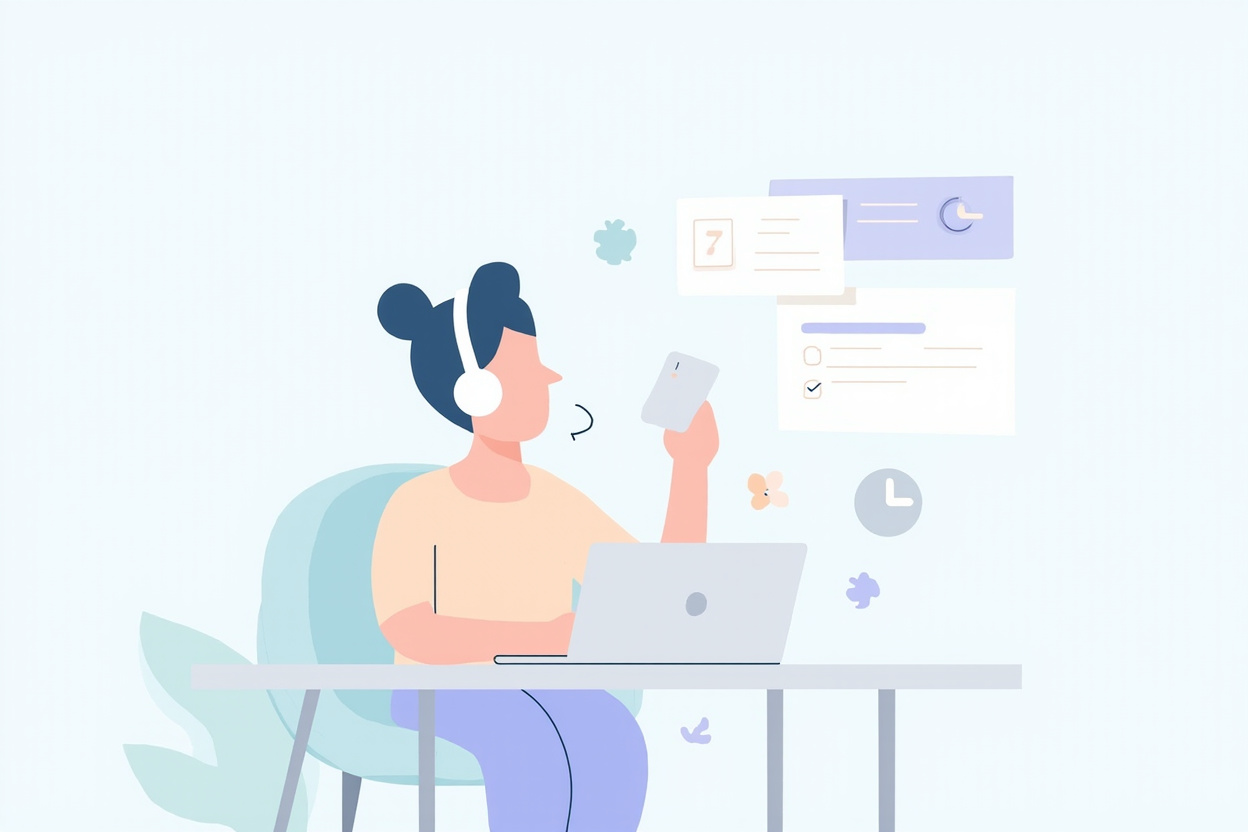
Use your real phone number to test the call workflow. No new apps for your clients.
Screening calls feel like a necessary tax on growth. For every great client or candidate, there are dozens of conversations that lead nowhere. The real cost isn’t just the time on the phone. It’s the administrative drag that follows. Juggling a conversation, assessing fit, and taking notes that your team can actually use is a three-way focus split. Someone always loses. Usually, it’s the notes.
This creates a backlog of recap debt. Account managers and senior developers end up translating scribbled notes into actionable items long after the call has ended. Context gets lost. Key details are forgotten. The process for software agencies screening calls becomes a bottleneck instead of an accelerator. You’re either moving fast or you’re documenting well, but rarely both.
Try it on the real workflow
Turn the next screening call into a finished summary
Use Superscribe while the context is still fresh. Focus on the conversation, keep working, and let the output land where it belongs.
The Split-Brain Problem of Screening
A screening call demands your full attention. You’re listening for technical depth, cultural fit, red flags, and budget alignment. At the same time, you’re expected to capture this information accurately for the rest of the team. This is where the process breaks.
If you focus on the person, your notes become a mess of cryptic keywords. If you focus on your notes, you miss the subtle cues in their voice and risk sounding distracted. The result is a pile of half-formed notes that require a “second pass” to become useful. This cleanup work is expensive. It pulls your most valuable people away from building software and into administrative tasks.
The cost multiplies across the agency. Inconsistent notes lead to inconsistent evaluation. A promising candidate gets overlooked because their key strengths weren’t written down. A new client project starts on the wrong foot because a critical detail from the discovery call was lost. The memory of your senior staff becomes the unofficial project database-a fragile and unscalable system.
From Lost Hours to a System That Listens
I didn’t start out trying to solve this for software agencies. I started by trying to solve it for myself. I was a freelance developer constantly losing money because I couldn’t remember my hours. At the end of the month, I’d piece together my work from emails, code commits, and messy notes. The numbers never felt right.
A few years ago, I had this idea for a simple phone app that could just catch my client calls. It seemed too complicated back then, so I put it aside. I kept building other voice tools, and each one taught me something new. The real shift happened when I added automatic time tracking to my main desktop app. I realized the missing link was that phone app I had dreamed up. I needed to connect real client calls to my work system without any extra steps.
The proof came to life on a plane. Using the in-flight Wi-Fi, I made regular business calls with my actual phone number. As I spoke, the calls were transcribed, summarized, and sent directly into my project management tools. AI agents in the background created tickets and drafted follow-up emails. There was no cleanup. No second pass. The work just happened.
That used to be a fantasy. Now it is the core of the product. This is the tool I always wanted. You have a conversation. The important details and the time spent are captured and routed for you. No timers, no messy notes, no guessing. Just good work that gets counted.
A Better Workflow for Software Agencies Screening Calls
The goal is to eliminate the recap debt. Instead of a person being the bridge between a conversation and the system of record, the call itself feeds the system directly.
Here’s how it works:
- Use Your Real Number: You make and receive calls just like you always do. There are no new apps for clients or candidates to install. It’s the same phone number they would already use.
- Focus on the Conversation: You don’t have to type. You just talk. The system captures the conversation in the background without getting in the way.
- Get an Instant Recap: As soon as the call ends, you get a clean transcript and an AI-generated summary. It highlights key points, decisions, and potential red flags.
- Route It to Your Team: The summary, notes, and action items can be automatically sent to Slack, your CRM, or your project management tool. The right people get the right context without you lifting a finger.
This changes the dynamic of screening. Your team can focus 100% on evaluating the person, knowing the documentation is handled. The scoring becomes more consistent because everyone is working from the same high-fidelity record, not from fragmented notes.
See the workflow
Get the screening call follow-up guide
A simple checklist for turning screening call notes into team-ready action items, faster and with less manual cleanup.
Stop Being the Memory Layer
Your best people should be designing systems and shipping code, not acting as human tape recorders. Relying on memory to transfer critical information from calls into your workflow is a recipe for missed deadlines and unhappy clients.
Every client interaction, especially in the early stages, is a deposit of execution context. When that context lives in someone’s head or in a messy document, it’s a liability. When it flows directly into your work surface, it becomes an asset. It allows your team to move faster, with more clarity and less administrative friction. Stop rebuilding calls from memory and let your conversations do the work for you.
Take the next step
Use this on your next screening call
Test the workflow from end to end. Have the conversation, see the recap appear, and watch it land in your team's workspace.
Frequently Asked Questions
How does this work with our existing phone numbers? Superscribe integrates with your real phone number. There is no need to port your number or give clients a new one to call. The setup is designed to be seamless and work with your existing carrier.
Is this just another transcription service? No. Transcription is just the first step. The real value is in turning the raw words into structured output-like summaries, action items, and CRM updates-and routing that output into your existing tools automatically.
How secure is the call data? All call data is processed with privacy and security as a top priority. We use industry-standard encryption and do not use your confidential client or candidate conversations for model training. Your data is yours.
Related paths
Superscribe
Stop rebuilding calls from memory
Use Superscribe to capture the words, context, next steps, and time while the work is still happening.
Start with calls