Call Notes to Meeting Minutes
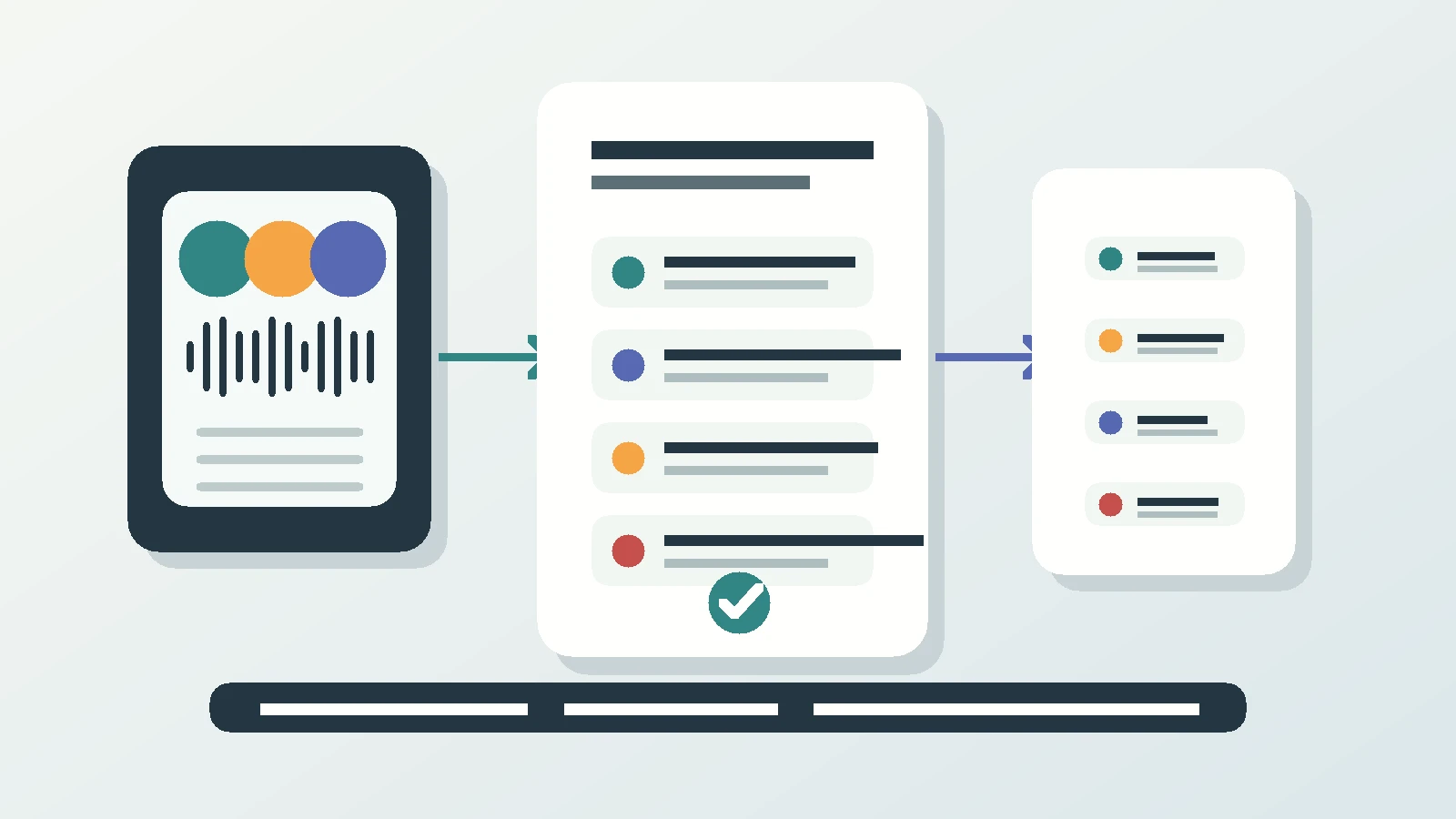
Meeting minutes are not supposed to be a transcript with better spacing.
After a client call, nobody wants to search through forty minutes of conversation to find the decision, the owner, the deadline, or the thing that might break the project next week.
They want the record.
What was decided? Who owns what? What is blocked? What did the client approve? What did the team promise? What needs to be reviewed before anyone treats the note as official?
That is the difference between call notes and useful meeting minutes.
For calls that need a clean record
Turn business calls into reviewed minutes
Superscribe Phone helps turn client calls into summaries, meeting minutes, follow-ups, CRM context, tasks, tickets, and billable detail while the conversation is still fresh.
The short version
A good call notes to meeting minutes workflow should capture:
- attendees and roles
- meeting purpose
- decisions made
- open questions
- risks or blockers
- action items with owners
- deadlines or review dates
- client commitments
- internal follow-up
- where the official record should live
The test is simple.
Could someone who missed the call understand what was agreed and what happens next?
If not, you still have notes. You do not have minutes yet.
Minutes need structure
Call notes usually follow the conversation.
Meeting minutes should follow responsibility.
That matters because client calls are rarely tidy. A client may raise a risk at minute three, approve a decision at minute twenty, change the owner near the end, and mention a missing document as everyone is leaving.
If the minutes follow the raw call order, the useful record is scattered.
If the minutes follow responsibility, the record becomes usable:
Decision: keep the current onboarding scope. Risk: import mapping still depends on client CSV policy. Owner: client to send policy by Tuesday. Team owner: Maria to prepare revised import checklist by Wednesday. Review: confirm scope again after legal feedback.
That is not a cleaner transcript.
It is the operational memory of the call.
This is the same reason call notes to project update needs a different shape than raw call capture. The call creates context, but the output has to serve the people who act on it.
What belongs in meeting minutes
A client-call minutes format should be boring on purpose.
Boring records get read. They get scanned. They reduce arguments later.
Use this structure when turning call notes into minutes.
Purpose
Write why the call happened.
Good:
Review onboarding import blockers and confirm next decision path.
Weak:
Client onboarding call.
The purpose should tell a future reader why this meeting mattered.
Decisions
Write decisions as facts, not vibes.
Good:
Client approved option B if implementation stays under four hours.
Weak:
Client liked option B.
If there was no decision, say that clearly.
No decision yet. Client wants legal review before approving option B.
That one line prevents a maybe from turning into accidental scope.
Actions
Every action needs an owner.
If ownership was not clear on the call, write “owner unclear” instead of guessing.
Useful action lines look like:
- Client to send CSV retention policy by Tuesday.
- Maria to prepare revised import checklist by Wednesday.
- Support owner unclear for the permissions ticket.
The action item should survive outside the memory of whoever took the call.
That is also the core problem behind call notes to tasks. A note is not a task until it has an owner, a destination, and enough context to act on.
Risks and blockers
Risks should not hide inside general notes.
Give them their own section.
Good:
Risk: demo date may move if legal does not approve the data clause by Friday.
That makes the risk visible before it becomes a surprise.
Follow-up
Minutes are often internal, but the same call may require a client-facing recap.
Do not merge those outputs.
The internal minutes can include uncertainty, risk, internal owners, and context the client does not need. The client follow-up should confirm the agreed items in a cleaner tone.
That is why call notes to follow-up email is a separate workflow. Same source call, different output.
Review before treating minutes as official
AI can help turn call notes into meeting minutes.
The review step still matters.
Minutes become a record people trust. If they are wrong, they can create bad scope, missed work, awkward client corrections, or internal confusion.
The practical workflow is:
- Capture the call.
- Extract decisions, actions, owners, risks, and open questions.
- Review the draft while the conversation is still fresh.
- Put the final minutes in the right place.
Speed is useful only if the record is still reliable.
That review habit is also consistent with how formal minutes are treated outside everyday client work. ASAE describes meeting minutes as a record of actions, not everything said. Atlassian’s minutes guidance also centers decisions, action items, accountability, and storage. Microsoft Teams Recap shows the same direction in software: notes, agenda, and follow-up tasks sit next to the recording and transcript instead of replacing judgment with raw capture.
Where Superscribe fits
Superscribe Phone is built for the layer after the business call.
It helps calls become reviewed summaries, meeting minutes, follow-ups, CRM notes, tasks, tickets, and billable context instead of another cleanup job.
The point is not to save every word.
The point is to make the call useful after it ends.
The practical rule
Do not make people read the call.
Give them the record of what changed because of the call.
That is what meeting minutes are for.
FAQ
Can AI turn call notes into meeting minutes?
Yes, but the draft still needs review. AI can extract decisions, owners, risks, and follow-up items from call notes. A person should still confirm that the minutes match what was actually agreed before treating them as the official record.
What is the difference between call notes and meeting minutes?
Call notes capture what happened during the conversation. Meeting minutes organize the useful record after the call: purpose, decisions, owners, deadlines, blockers, open questions, and where the final note belongs.
Should meeting minutes include the whole transcript?
Usually no. A transcript can be useful as backup, but minutes should be a concise record of decisions and actions. If people have to read the whole call to find the next step, the minutes are not doing their job.