Dragon alternative for recruiters
A Dragon alternative for recruiters who need usable output, not more cleanup
If Dragon still leaves too much recap work, admin drag, or lost context, this is the pain-first alternative.
Superscribe
Stop rebuilding work after the fact
Use Superscribe to capture the words, context, next steps, and time while the work is still happening.
The candidate call ends. You have ten minutes before the next one. Your screen has a raw block of text from your dictation tool, and now the real work begins. You have to find the key details, format the scorecard, update the ATS, and maybe even log your time.
This is the hidden workload that dictation tools like Dragon don’t solve. They give you the words, but you still do the cleanup. You still have to manually route the output. You’re still doing a second pass of work after the first pass was already done.
If you are looking for a Dragon alternative for recruiters, you probably don’t need a better word-for-word dictation tool. You need to get rid of the work that comes after the words are on the screen.
The Real Job Is Placement, Not Just Transcription
For high-volume recruiters, the bottleneck isn’t typing speed. It’s context switching. The gap between a great candidate conversation and a clean, useful note in your Applicant Tracking System is where critical details get lost.
Dragon is a powerful tool for turning speech into a block of text. But that text is just raw material. It still needs to be:
- Edited: Removing ums, ahs, and conversational filler.
- Formatted: Structuring the text into a scorecard, summary, or key takeaways.
- Routed: Copying and pasting the final notes into the correct fields in your ATS.
- Logged: Manually entering the time spent on the call and follow-up.
Each step is a chance for error and a drain on your focus. The most valuable output is not a perfect transcript. It’s a structured, usable record that lands in the right place with minimal effort.
A Quick Comparison: Superscribe vs. Dragon
Choosing a Dragon alternative for recruiters is less about features and more about the final workflow. The goal is to close the gap between conversation and record.
| Feature | Dragon | Superscribe |
|---|---|---|
| Core Job | General-purpose dictation. | Structured notes and time capture. |
| Output | A raw block of text. | Cleaned, structured, usable text. |
| Cleanup | Requires a full manual editing pass. | Minimal cleanup needed. |
| Workflow | Manual copy, paste, and format. | Formatted for workflow, ready to use. |
| Time Tracking | None. | Automatic and in the background. |
| Best For | Users who need to replace typing. | Recruiters who need to eliminate admin. |
I Built This Because I Hated Rebuilding My Own Work
My problem was a bit different, but the feeling was the same. I built Superscribe because I got tired of guessing my hours at the end of every month. I would look through emails, code, chat messages and random notes trying to remember what I actually did. I knew I was losing money. The work was done, but the record was a mess.
It sounds a lot like trying to piece together a candidate scorecard from fragmented notes after a long day of back-to-back calls. The context is gone and you’re just doing paperwork.
A few years ago, I had an idea for an app that could capture my work automatically. It seemed too hard at the time, so I gave up on it. I kept building other voice tools, and each one taught me something new. The missing piece finally clicked when I added automatic time tracking to the main desktop app. The time was the anchor for every other piece of context.
The proof came on a flight. I used the plane’s Wi-Fi to make normal business calls. The calls were automatically transcribed, cleaned up, turned into structured notes, and sent right into my work system. The time was logged. The next steps were ready. Nothing was lost.
That used to be a wish. Now it is how the product works. This is the tool I always wanted. You speak. Clean words appear right where you need them. The time and notes happen by themselves in the background. It lets you stay in the work instead of doing paperwork later.
How It Works: From Spoken Word to ATS-Ready Note
Superscribe is designed to fit between your tasks, not add another one. For a recruiter, the workflow is simple and stays out of your way.
- Finish your call.
- Press a global hotkey on your computer.
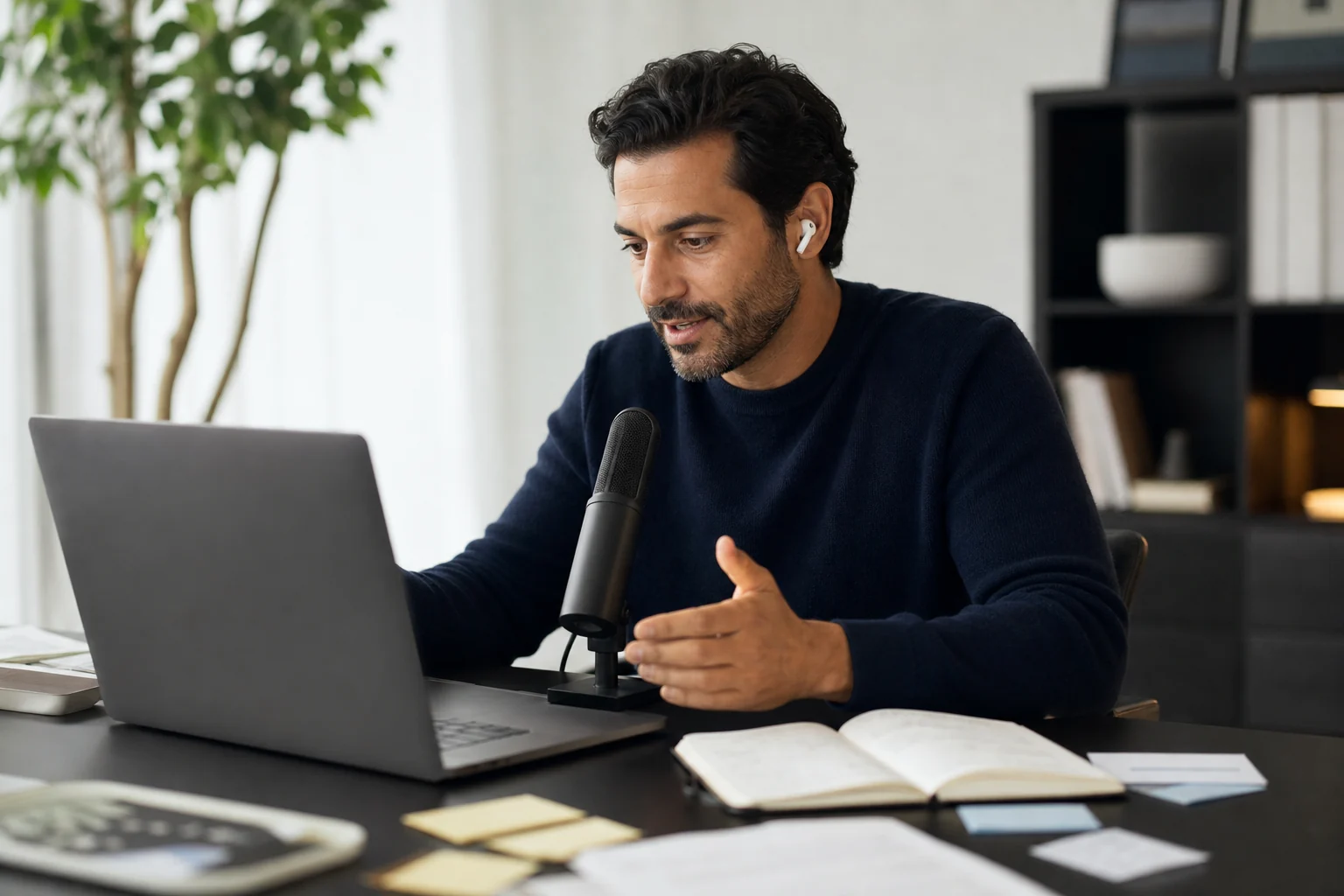
- Speak your notes naturally. “Candidate John Doe follow-up. Strong on cloud infrastructure, a bit light on Python scripting. Good culture fit for the engineering team. Next step is to schedule a technical interview with Sarah.”
- The text appears wherever your cursor is-your ATS, a document, an email-already cleaned and formatted.
- The time is tracked automatically in the background, associated with the right candidate or project.
There is no app to switch to. There is no block of text to re-read and fix. You just talk, and the finished work appears where it belongs.
Test this on your next candidate
Open your ATS and speak your next update
The fastest way to see the difference is to try it. Capture your next set of candidate notes with Superscribe and see how much cleanup you skip.
Stop Rebuilding Work After the Fact
The best tool is the one you notice the least. It should shorten the distance between your thought and the finished product. While Dragon is a powerful dictation engine, it still leaves you with the job of refining and routing the output.
Superscribe is built on a different premise. It assumes the first draft of your spoken notes should be the final one. It captures your words, context, and time while the work is happening, so you can move on to the next conversation instead of cleaning up the last one.
Frequently Asked Questions
1. Does Superscribe work with my specific ATS? Yes. Superscribe works at the operating system level. It can paste clean, structured text into any application where you can type. You can create simple templates for your scorecards and speak directly into your ATS fields.
2. How is this different from my Mac or PC’s built-in dictation? Standard dictation tools are like Dragon-they provide raw, unformatted text. Superscribe is built for professional workflows. It provides superior accuracy, automatic punctuation, filler word removal, and background time tracking. It turns your speech into a finished product, not just a string of words.
3. Is this a meeting bot that records my calls? No. Superscribe is not a meeting bot that joins your calls. It is a personal tool for you to capture your own notes and thoughts live or immediately after a conversation. It activates only when you tell it to, ensuring your conversations remain private and you only capture the details you need.