dictation for brokers case notes
Dictation for brokers case notes, without the usual cleanup mess
Superscribe is strongest when you need to turn talking into usable case notes before the details go cold.
Superscribe
Stop rebuilding work after the fact
Use Superscribe to capture the words, context, next steps, and time while the work is still happening.
A broker’s case notes are not a diary. They are the record of what was quoted, to whom, at what rate, with what conditions, and what you promised to do next. That record is worth money and it is worth protection. Which is why dictation for brokers case notes is not a typing-speed trick. It is a timing decision. Either the note gets made while the numbers are still in your head, or it gets rebuilt at 7pm from memory and a half-legible scrawl on a printed quote sheet.
Most brokers I talk to are stuck in the second version. Six calls before lunch. Three quotes revised. Two callbacks promised for “tomorrow morning.” Then a full afternoon of the same. By evening you are trying to remember whether the 4.9% was for the client with the buy-to-let or the one who asked about the fixed term, and whether the excess you quoted was 500 or 1000.
Late capture is not a time problem, it is a risk problem
Everyone frames delayed note-taking as an efficiency issue. It is not. If a note is written four hours late, it is still written. The problem is that it is written differently.
Late notes lose three things in a specific order. First, the exact figures blur into approximations. Second, the client’s own words get replaced by your summary of them, which is the part that matters when someone later says “you told me it would cover that.” Third, the small promises disappear entirely. The “I’ll check with the underwriter and come back Thursday” is the easiest thing to drop and the most expensive thing to miss.
A weak record is fine right up until the moment someone questions it. Then it is the only thing you have. Brokers do not get to argue from memory. You argue from the file.
Try it on the real workflow
Turn the next spoken note into finished work
Use Superscribe while the context is still fresh. Speak naturally, keep working, and let the output land where it belongs.
What live dictation actually changes for case notes
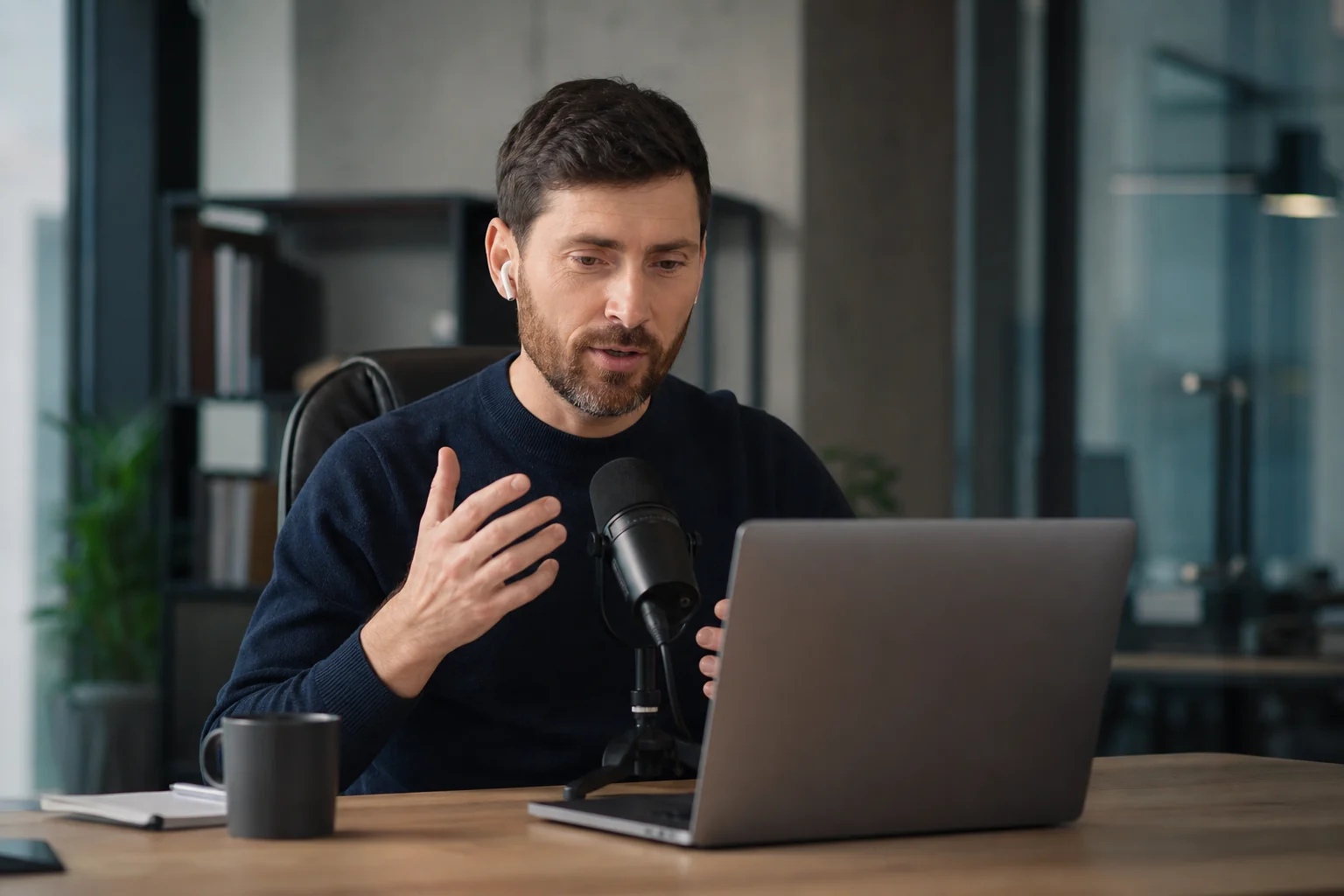
Live dictation means you speak and clean text appears in the field you already have open. Your CRM note box. The case record. The email draft to the underwriter. Not a separate recording app you have to open, export from, and paste out of later.
The difference is small mechanically and large in practice. If the note has to travel through a second tool, you will postpone it. If the note appears where it already belongs, you make it in the ninety seconds after you hang up, while the client’s exact phrasing is still in your ears.
That is the whole argument. Not “dictation is faster than typing.” It is that dictation removes the reason to defer, and deferral is what damages the record.
Superscribe also handles many languages with automatic detection, which matters if half your book speaks one language at home and another at work. You do not switch modes. You just talk.
The note that survives a dispute
Good broker case notes tend to share a shape. Try dictating in this order and you will find it becomes a habit within a week:
- Who you spoke to and what they were actually asking for, in their words.
- Every number you said out loud. Rate, term, premium, excess, fee, LTV. Numbers first.
- Every condition or caveat you attached to those numbers.
- What you committed to and by when.
- What the client committed to and by when.
Five items. Maybe forty seconds spoken. Try writing that by hand at the end of the day for eleven clients and see how much survives.
The reason to dictate this live is that steps 2 and 3 are the ones you cannot reconstruct honestly. You either said “subject to valuation” or you did not. Your memory at 7pm will be generous to you. The note taken at 11:04am will be accurate.
Where the time tracking quietly comes in
Here is the part brokers usually do not expect. In Superscribe, the act of dictating is also the tracked event. When you speak a case note, the transcription is captured, semantically matched to the right client or project context, and the time is logged against it as you go. No timer to start. No timer to forget to stop.
Semantic matching gets better the more you work on a given file. You can also set a minimum billable unit. The default is 30 minutes, and you can raise it to whatever your own standard is if you bill in larger blocks.
For fee-based advisory work this closes a real leak. For commission-based work it still gives you an honest view of where your hours actually go, which is usually not where you assume.
Build the habit, not the backlog
Get the call notes to action-items template pack
A simple structure for dictating case notes that hold up later: numbers, conditions, commitments, and callbacks in one pass.
Why I built this, and where the phone piece fits
I am Siim. I built Superscribe because I got tired of guessing my hours at the end of every month. I would dig through emails, chat messages and random notes trying to remember what I had actually done, and the numbers were never right. I knew I was losing money.
Three years ago I had an idea for a phone app that would automatically catch client calls. I gave up on it. It felt too hard. In the years after I kept building other voice tools, and each one taught me something. When I added automatic time tracking to the desktop app, the missing piece became obvious. Desktop dictation handled the writing. But my most important work started on calls, and that part was still manual.
The proof came on a flight. I made normal business calls with my regular phone number over the plane’s Starlink Wi-Fi. The calls were transcribed, cleaned up, turned into structured output and sent straight into my work system. Agents handled the next steps without me touching anything.
For brokers that second piece is the obvious one. Superscribe Phone captures the call using your own number, no new number to hand out, and produces the summary, the action items and the record, with the audio kept for the detail that later gets disputed. Structured output can route onward through API, MCP, webhook, or agent workflows.
But the desktop dictation is what you use between calls, and it is where case notes actually get written. The two work together. Neither one asks you to do admin later.
The practical takeaway
Do not try to fix your note-taking with discipline. Discipline loses to a busy Tuesday every time. Fix the timing instead.
Pick one habit: after every call that involved a number or a promise, dictate the five-line note straight into the case record before you dial the next one. Ninety seconds. No evening rebuild. No trying to remember which client got which rate.
The record gets stronger, the callbacks stop slipping, and the time gets counted without you thinking about it.
Next step
Open your next case file and dictate the note now
Speak the numbers, the conditions and the callback while they are still exact. Let the note and the time land on their own.
FAQ
Does dictation work inside my CRM or case management system? Superscribe types into the active input field on your desktop. If your CRM note box, email client, or document is where you normally type, that is where the text appears. There is no separate app to export from.
What about numbers and product names? Dictate them the way you say them on the call. Reviewing a note you just spoke takes seconds, and correcting one figure while it is fresh is far safer than reconstructing all of them hours later.
Do I still need the phone product if I have desktop dictation? They solve different halves. Desktop dictation covers case notes, emails and internal updates you write yourself. Superscribe Phone covers the call itself, using your own number, producing the summary, action items and audio record. Many brokers get the most value from both.