dictation for brokers timesheets
Dictation for brokers timesheets, without the usual cleanup mess
Superscribe is strongest when you need to turn talking into usable timesheets before the details go cold.
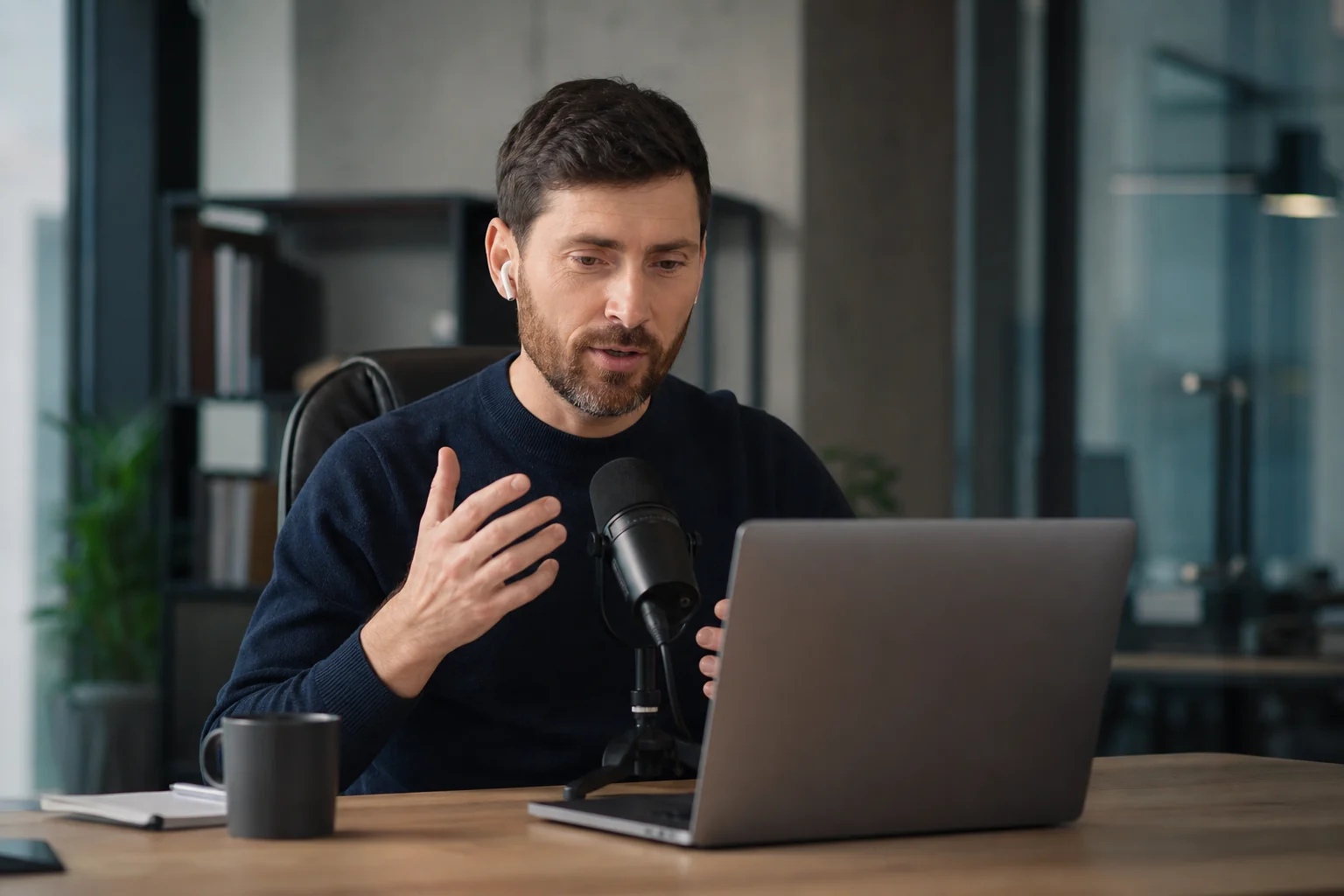
Superscribe
Stop rebuilding work after the fact
Use Superscribe to capture the words, context, next steps, and time while the work is still happening.
A broker’s timesheet is usually written at 9pm on a Thursday, from memory, three days after the work happened. You know you spoke to the client about the renewal. You know you re-ran the rate. You know you chased the underwriter twice. What you do not know is whether that was 20 minutes or 90, and whether the second call happened Tuesday or Wednesday.
That is why dictation for brokers timesheets is worth taking seriously. Not as a way to talk your hours into a box at the end of the week, which is still admin. As a way to have the timesheet write itself while you are actually working the file.
Reconstructed time is guessed time
Insurance, mortgage, and finance brokers carry precise numbers all day. Premiums, rates, deductibles, LTVs, effective dates. Then the same person who tracked a quote to two decimal places writes “client work, 2h” on a Friday timesheet.
The gap is not carelessness. It is that the detail lives in the moment and the moment is gone. You had the exact figure in your head when you were on the call. By the time you write the timesheet you have the shape of the work but not the substance. So the entries get rounded, padded, or shaved. Some hours never get logged at all.
The stakes are bigger than the hours themselves. A vague timesheet is also a vague record. When a client asks what was quoted, when a compliance review asks who was told what and on which date, when a promised callback slips, the timesheet is often the only trail. If it was reconstructed from memory, it is not a trail. It is a story you told yourself.
Try it on the real workflow
Turn the next spoken note into finished work
Use Superscribe while the context is still fresh. Speak naturally, keep working, and let the output land where it belongs.
Why I stopped guessing my own hours
I am Siim. I built Superscribe because my own month-end was embarrassing. I would open my email, my chat, my notes and my code, and try to work out what I had actually done. The numbers were never right. I was losing money and I knew it.
Three years ago I had an idea for a phone app that would catch client calls automatically. I gave up. It felt too hard. So I kept building other voice tools instead, and each one taught me something.
Then I added automatic time tracking to the desktop app and the missing piece became obvious. Dictation was not just a typing shortcut. The act of speaking was the event worth tracking. If I dictate a note about the Henderson renewal, the app knows what I worked on, when, and for how long. No timer to start. No timer to forget.
The proof came on a flight. I made normal business calls with my regular phone number over the plane’s Starlink Wi-Fi. Those calls were transcribed, cleaned, turned into structured output, and pushed into my work system. Agents took the next steps without me touching anything. That used to be a wish. Now it is how the product works.
For brokers, the same logic applies with more at stake. Your highest-value work starts in calls. The quote conversation, the rate discussion, the “let me check and call you back” promise. Superscribe Phone captures those call turns with your own number, transcribes them including multilingual calls, and produces the summary, the action items, and the record. The audio stays available for the one detail that gets disputed later. Desktop dictation then covers everything around the call: the file note, the underwriter email, the follow-up.
What live dictation actually changes on the timesheet
The difference is not “faster typing.” It is what the entry contains.
| Written later from memory | Captured live as you speak |
|---|---|
| “Client work, 2h” | Named client, named policy, the figure discussed |
| Guessed start and end | Real timestamp of when the work happened |
| Callbacks recalled if lucky | Every promised callback captured as an action item |
| No source | Transcript and audio behind the entry |
| Written at 9pm | Written at the moment, then forgotten |
Superscribe dictates into whatever field you are already in. Your CRM note, your quoting tool, your email. As you dictate, the transcription is matched semantically to the right client or project, and time is tracked against it. That matching gets sharper the more you work on the same files. You set a minimum billable unit. The default is 30 minutes, and you can change it to whatever your firm bills in, including larger blocks.
Workflow worth stealing
The call-to-record loop for brokers
Call captured with your own number, summary and action items generated, file note dictated live, time logged against the right client without a timer.
A realistic broker day, run this way
Morning renewal call comes in on your normal number. It gets captured, transcribed, and turned into a summary with the quoted figure and the two things you promised to check. You do not stop the call to take notes.
You then open the client file and speak the note directly into it: what was discussed, the rate you gave, the condition attached. That dictation is the tracked event. Time lands on that client.
Underwriter emails back at lunch. You dictate the reply in place. Tracked again. Afternoon callback happens. Captured again, with the follow-up promise recorded rather than remembered.
At the end of the week, the timesheet is not a writing task. It is a review task. You read what already exists and correct the odd line. That is the whole point. Better timesheet detail is a side effect of doing the work out loud instead of reconstructing it in silence.
The slightly contrarian part
Most time tracking advice tells you to be more disciplined. Start the timer. Log as you go. Use the app.
Brokers do not fail at timesheets because of discipline. They fail because the work is conversational and interruptive, and no timer survives a day of inbound calls and rate checks. The fix is not more willpower. It is making the capture invisible, so the record is a by-product of the work rather than a second job after it.
FAQ
Does this replace my CRM or timesheet system? No. Superscribe writes into the tools you already use. Dictation lands in whatever field is active, and structured call output can route onward through API, MCP, webhook, email, or agent workflows.
Do I need a second phone number for call capture? No. Superscribe Phone uses your real number, and it works over internet or Wi-Fi when you are travelling.
What if a client disputes a figure I quoted? The transcript and the audio are kept alongside the summary, so the disputed detail has a source instead of a recollection.
Next step
Run one client file this way today
Pick the next call on your calendar. Capture it, dictate the file note live, and see what your timesheet looks like when nothing was reconstructed.